Need immediate crisis support? Call or text 988Admissions (423) 518-1450
← Our Program

PREPARING FOR LIFE AT RSM

What to expect.
Room to grow. Structure to help.

Entering residential recovery is a significant commitment. Knowing what everyday life involves can help you arrive with clearer expectations—and a heart ready to begin.

01 / BEFORE ARRIVAL

Begin with an honest conversation.

Tell admissions about your recovery needs, legal obligations, medications, and physical needs. RSM determines campus placement through an evaluation of your recovery and legal needs.

Understand the commitment

RSM is a Christ-centered residential recovery program with a minimum commitment of 12 months. Prayer, worship, biblical study, work responsibilities, and community participation are part of the commitment.

You do not need to arrive with a biblical background. You do need to understand the Christian foundation of the program and be willing to participate.

Plan the practical details

The non-refundable $1,000 intake processing fee applies at all four campuses. Insurance is not required and does not cover this fee; it is payable out of pocket. Contact the office about payment arrangements.

Review the men’s and women’s packing lists before packing. Bring only approved items and confirm arrival arrangements with admissions.

What happens when I arrive?

Staff complete intake procedures, inventory belongings, and carry out a search by same-gender staff. An intake shower is required, with hygiene products provided.

You will learn your bunk assignment, posted schedule, chores, laundry arrangements, and where you are expected to be. During the first 30 days, new students are seated apart from other new students during meals, classes, and activities.

Ask for clarification if you do not understand an instruction or need help settling in.

OUR CHALLENGE TO YOU

Come ready to participate.
Ask questions. Grow.

Take time to understand the program’s expectations and ask questions before you enroll. Bring a willing heart, a teachable spirit, and the courage to let God lead you into a different way of living.

Nothing changes until something changes.

Different may feel uncomfortable.

For years, survival and addiction may have shaped your decisions. Secrecy, dishonesty, taking from others, avoiding responsibility, or chasing immediate relief may have become familiar patterns. Those patterns do not have to define your future.

Now you are stepping into a culture of truth, boundaries, accountability, and consistency. A schedule, a correction, or being told “not right now” may feel unfamiliar—even frustrating. Familiar does not always mean healthy, and unfamiliar does not automatically mean wrong.

Discomfort can be part of leaving an old cycle behind. Instead of immediately deciding, “This program isn’t for me,” pause and ask, “What am I being invited to learn?”

Practice listening and asking questions.

You will not agree with every instruction or enjoy every responsibility. Leaders may challenge you, frustrate you, or tell you something you would rather not hear. Practice listening before reacting, asking for understanding respectfully, and receiving guidance without needing to win every disagreement.

Our challenge is to lay down the insistence that everything happen your way, on your timetable, and without discomfort. A teachable heart can say, “I do not have every answer. I need help learning a different way.”

Humility makes room for honest questions and correction. You can be teachable and still speak openly about a concern.

Remember why you came.

When a hard day makes you want to quit, remember the call you made and the hope behind it. Remember what you wanted to leave behind—and the life you hoped could be possible. Let that purpose guide your next step without using your past to shame yourself.

Keep your reasons close: renewed faith, restored relationships, integrity, stability, and freedom in Christ. One difficult moment does not have to decide the direction of your life.

Cling to God in the dry seasons.

Some days may feel like a desert. You may not feel inspired, comfortable, or rewarded. Those can be opportunities to practice prayer, patience, and dependence on God rather than immediately reaching for escape.

Following Christ means learning daily surrender. Jesus calls His followers to deny themselves, take up their cross daily, and follow Him (Luke 9:23). Lay down revenge, grudges, and the demand to control every outcome. Ask God for grace to take the next faithful step.

You do not have to face that work alone. Ask for prayer and support when you are struggling.

Practice the life you are preparing to live.

Life beyond the program will include deadlines, responsibilities, disagreements, and pressure. At RSM, meeting commitments, completing assignments, working with others, and learning to respond honestly under stress are opportunities to practice those everyday skills.

The goal is to become more dependable, more grounded in Christ, and better equipped to face a difficult day without returning to destructive patterns. When pressure feels overwhelming, communicate early and ask for help.

Remember why you came. Stay teachable. Keep turning toward God.

Our commitment to you.

We’re going to challenge you. We’re going to push you. We’re going to encourage you. We’re going to be honest with you, even when it hurts. We’re going to correct you and train you.

Most importantly, we’re going to show you the love of God.

This is your time. Don’t waste it.
The ball’s in your court.

Trusting the process does not mean ignoring harm or an unmet health need. Growth can be uncomfortable, but discomfort alone is not proof of progress. Speak up about safety, health, or mistreatment concerns and seek appropriate help.

02 / DAILY LIFE

A steady rhythm, with purpose.

Each day combines spiritual growth with practical responsibility. Follow the posted campus schedule; assignments, services, and activities can change.

Prepare

Care for your space.

Make your bed, dress in the assigned attire, attend prayer, and check the daily schedule. Keep your belongings organized and be on time.

Participate

Learn, work, and serve.

Take part in classes, study, job training, meals, and assigned chores. Complete tasks thoroughly and report to your supervisor when finished.

Reflect

Make space for God.

Evening routines create time to settle in and reflect. Men report to the dorm by 9 p.m.; women have journaling and turn in point sheets from 9–9:30 p.m. Follow your campus’s lights-out instructions.

See the daily schedules

Here is a closer look at the rhythm of each program. Follow your campus’s posted schedule and staff instructions for changes, services, and individual assignments.

Men’s daily schedule

Some daytime activities apply only to students on campus or assigned to a particular group, as noted below.

Men’s daily schedule
TimeActivity
5:30 a.m.Lights on / wake up
5:30–6 a.m.Hygiene / wellness
6–6:30 a.m.Prayer20 minutes out loud; 10 minutes silent.
6:30–6:50 a.m.Breakfast
6:50–7:05 a.m.Medication monitoring
7:05–7:35 a.m.Morning choresIn class by 7:40 a.m.
7:45–8:30 a.m.Small-group class
8:30–8:40 a.m.Bathroom breakIn class by 8:40 a.m.
8:45–9:30 a.m.Small-group class
9:30 a.m.–4:30 p.m.Daily assignmentsEveryone back on campus by 5 p.m.
9:45–10:30 a.m.IOP groupIOP residents only.
11–11:30 a.m.LunchIf on campus.
2–4 p.m.Free timeIf on campus and not scheduled for assignments.
4–5:30 p.m.Hygiene / wellness / downtime
5:30–5:50 p.m.Dinner
5:50–6:20 p.m.Evening choresIn class by 6:25 p.m.
6:30–7:15 p.m.Large-group class
7:15–7:25 p.m.Bathroom breakIn choir practice by 7:25 p.m.
7:30–8:30 p.m.Choir practiceLarge group.
8:40–8:55 p.m.Medication monitoring
9 p.m.Everyone in the dorm
Women’s daily schedule
TimeActivity
5:30 a.m.Wake up
6–6:30 a.m.Prayer
6:30–7 a.m.Breakfast
7–7:30 a.m.Chores
7:45–8 a.m.Proverbs
8–9 a.m.Choir practice / worship
9–10 a.m.Class
10 a.m.Go to assigned area
11:30 a.m.–noonLunch
1–6 p.m.Job-skills training / study hall
6–6:30 p.m.Dinner
6:30–7 p.m.Chores
7–8 p.m.Showers
8–9 p.m.Downtime
9–9:30 p.m.Journaling / turn in point sheets
Shared living, clothing, and personal belongings
  • Keep beds, lockers, laundry, and common areas clean. Do not enter another student’s space or borrow or share belongings.
  • Follow assigned laundry times, daily shower expectations, and bathroom cleanup procedures. Showers use a 15-minute timer.
  • Wear assigned job-training clothing and follow modest dress and grooming standards. Torn clothing and inappropriate slogans are not permitted.
  • Only approved belongings and reading materials may be kept in living areas. Dorms and belongings may be inspected.
  • Follow quiet times and lights-out rules. Recreation takes place in designated areas under supervision.
03 / DISCIPLESHIP & WORK

Practice what you are learning.

At RSM, discipleship extends into how you speak, serve, study, work, and care for the people around you.

Biblical education

The Education (EDU) program assigns a study contract each month, with 30 days to complete the work and required testing. Topics include biblical foundations, identity, relationships, obedience, and responsibility.

Scripture memorization and recitation are required. Students also use journaling to reflect on gratitude, struggles, prayer, and what they are learning.

Practical responsibility

Assigned chores and job-skills training are required. Students learn to follow instructions, work with others, complete tasks, and represent the ministry respectfully.

RSM’s structured work therapy is unpaid. Admissions will discuss the physical requirements before acceptance. Donations received during ministry activities must go to supervisors, never directly to students.

Explore the program’s progression →

A SIGNIFICANT PART OF PROGRAM LIFE

Storefront fundraising.
Know what to expect.

Storefront fundraising is a significant, expected part of RSM’s work-study program. Students participate in assigned fundraising and community outreach as part of the program’s unpaid, structured work responsibilities.

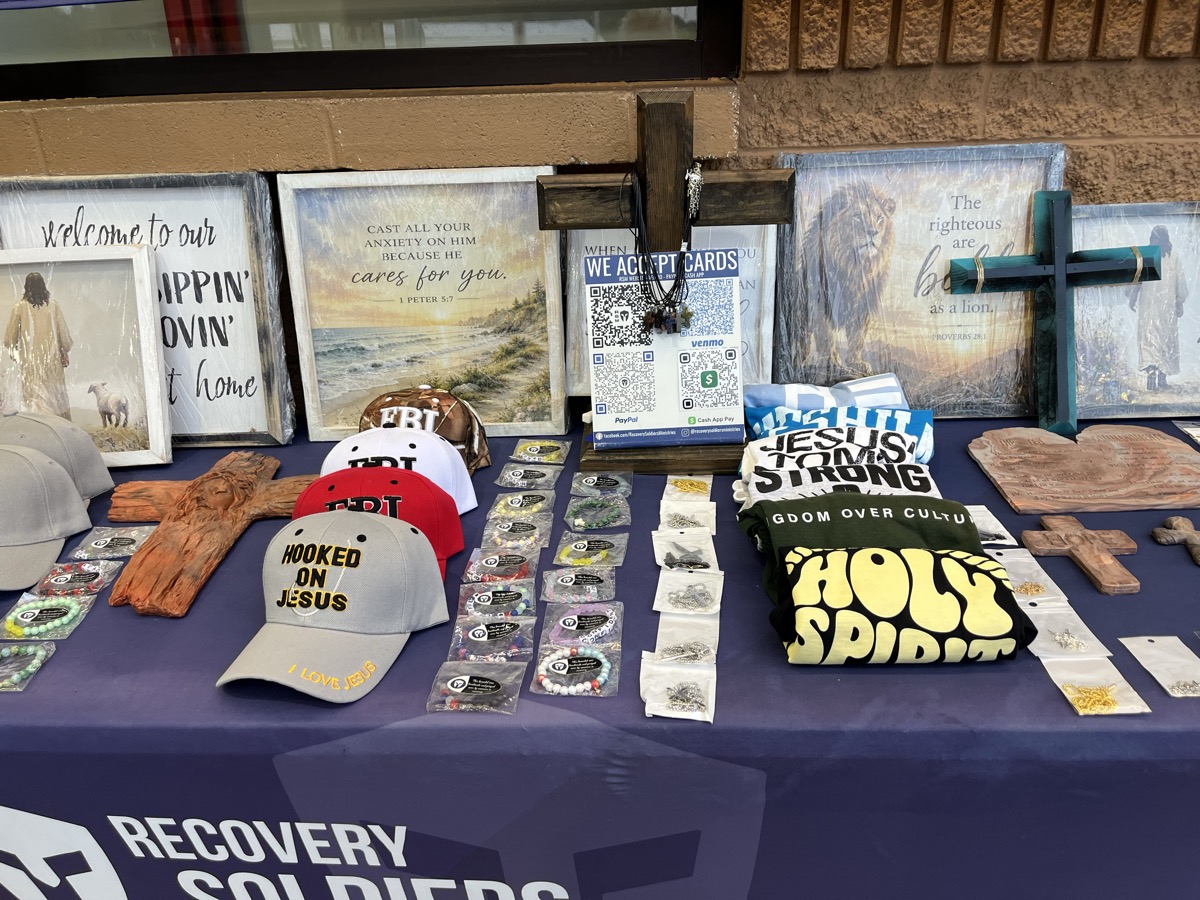
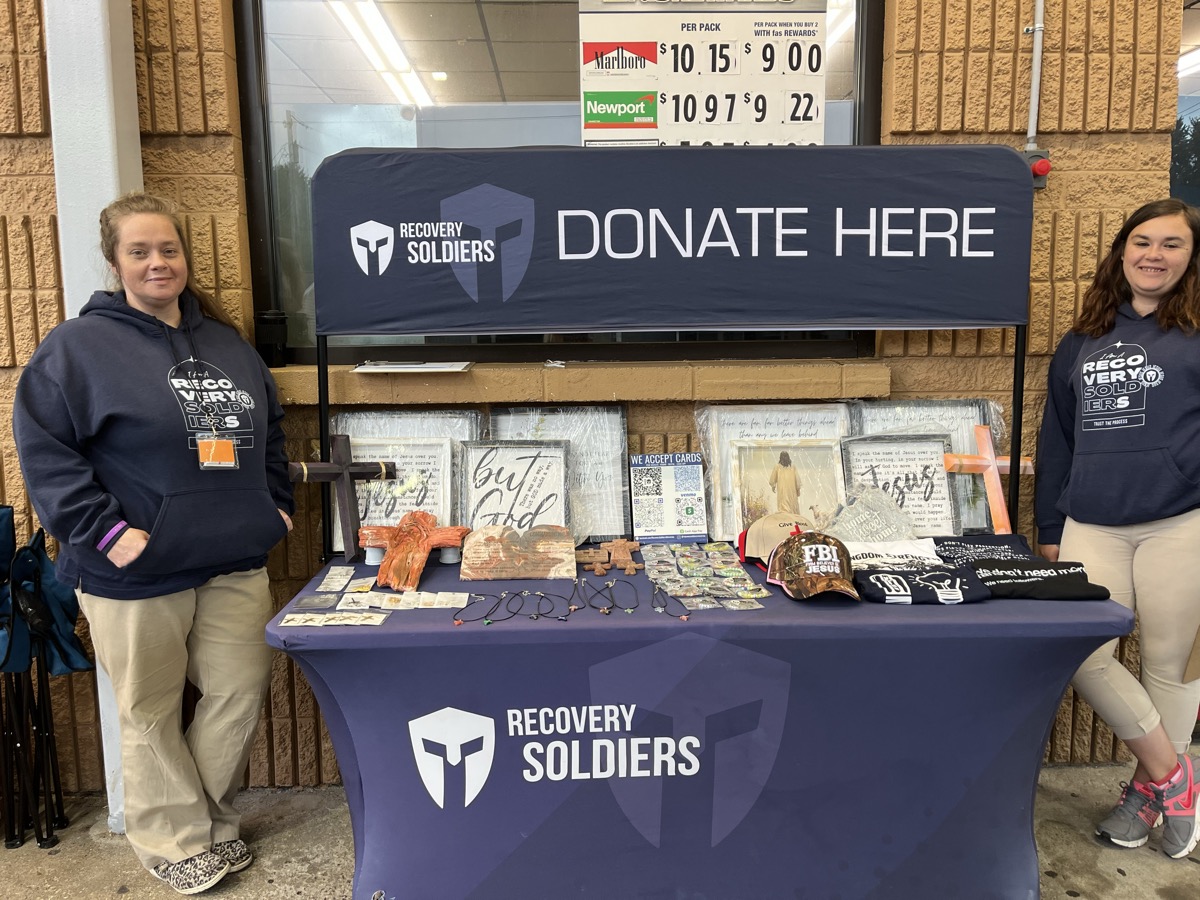
At storefront tables, students meet the public, share about Recovery Soldiers Ministries, and invite people to support the ministry. These photos show the RSM displays, faith-based items, and donation tables you may help with.

This is a practical setting for learning to communicate respectfully, work as a team, follow direction, and remain dependable throughout an assignment. Fundraising also helps support the ministry’s work.

Come prepared to participate. Before enrolling, discuss the current schedule, time commitments, physical demands, and any health needs with admissions so you understand what will be expected of you. Donations go to supervisors, never directly to students.

Talk with admissions: 423-518-1450 →
Two women beside an RSM storefront fundraising table with a Donate Here banner
Representing RSM in the community.
Faith-based shirts, hats, crosses, and artwork displayed on an RSM fundraising table
A closer look at a storefront fundraising display.
What if I struggle with assignments?

Ask your teacher or leader for clarification when you need it. Students are expected to keep up with study contracts, Scripture memory, and testing, and to apply what they learn.

Falling behind can result in academic discipline: additional study during downtime, earlier morning study or prayer, and restrictions on recreation, phone calls, or visits according to student level. Leadership verifies completed work before restoring privileges.

04 / RULES & ACCOUNTABILITY

Clear boundaries. Shared responsibility.

Community life requires honesty, respect, and consistency. Students are expected to follow staff direction, stay within approved areas, and participate in scheduled activities.

Random testing & regular searches

Expect random drug screens, alcohol and nicotine testing, and regular searches of your person, belongings, and living areas throughout the program. These are routine parts of campus accountability, not just intake procedures.

Alcohol, prohibited drugs, nicotine, and tobacco are not permitted. Students are expected to cooperate with testing and searches.

Respectful conduct

Honesty, appropriate language, punctuality, and respect for staff and fellow students are expected. Fighting, threats, stealing, and prohibited substances can result in dismissal.

Healthy boundaries

Romantic relationships between students are prohibited. Follow approved-contact rules and avoid cliques, gossip, and unauthorized contact.

Money & belongings

Students may not carry cash or receive money or items directly at visits. Everything must be handed to the staff member on duty. Visitors may never show a student their phone or let a student view, hold, or use it.

How does the accountability system work?

Students carry a point sheet that records participation and daily conduct. Supervisors review it during work and study. Students also record a meaningful “daily win.”

Scores reflect participation and areas needing growth. Rule violations can lead to additional duties, restrictions on privileges, or a change in program status.

The handbook describes measures including additional chores, word fasts, separate meal seating, loss of coffee and dessert privileges, earlier wake-up times, and loss of phone or visitation privileges. Ask the director to explain how these measures are used and how concerns can be raised before you enroll.

How long do restrictions last? Restrictions are reviewed at the beginning of each week. Staff review the student’s growth and behavior and may lift restrictions when the student has shown improvement. Restrictions are considered week by week; they do not automatically end after one week.

What is a word fast? During correction or discipline, a word fast restricts casual conversation between peers. Students may communicate with peers about meaningful work-related topics and may always bring needs, concerns, or issues to staff. RSM uses this measure to teach listening before speaking and to limit negative peer conversations.

Coffee and dessert privileges: Students on correction or discipline status may lose coffee and dessert privileges.

If you do not understand a correction or have a concern, ask for clarification respectfully. Raise safety or health concerns promptly.

05 / STAYING CONNECTED

Stay connected within the structure.

Communication follows campus rules and approved-contact guidelines. Your family can find schedules, mailing addresses, and visit instructions on For Families.

The first 30 days

At the women’s campuses, phone calls and visits begin only after the initial 30-day waiting period and when the student is eligible. Letters and packages may begin immediately.

Mail is handled by staff. Letters must be to approved contacts; outgoing mail is submitted unsealed for review.

Scheduled family calls

Eligible students have a scheduled Sunday phone call, supervised on speakerphone. Students with children ages 18 and under may have two calls per week. Privileges depend on program standing and staff guidance.

For romantic partners, communication before the 10-month mark is limited to legally married spouses. Unmarried partners must wait until the 10-month mark and follow approval requirements.

06 / CARE & CONCERNS

Understand the care arrangements. Know how to speak up.

Share health needs and concerns before arrival so admissions can help you plan ahead and prepare for daily life in the program.

Medication and medical appointments

Medication is stored by staff rather than kept on your person. Students follow scheduled medication procedures and sign for medication. Notify the staff member on duty if you need access to a scheduled medication or have a health concern.

The handbook describes staff accompanying students to medical appointments, including the consultation. Discuss medications, appointment arrangements, privacy, and any individual needs with admissions and your healthcare provider before entry.

If you are considering leaving

Speak directly with staff about your decision, transportation, and belongings. RSM’s departure policy requires advance notice and describes approved pickup and transportation arrangements; RSM does not arrange alternative housing or another program following voluntary withdrawal.

The handbook requires belongings to be collected promptly, generally within 24 hours unless leadership approves other arrangements. If you are under court or other legal supervision, discuss the requirements of your case with your supervising authority before making plans to leave.

07 / PREPARING FOR WHAT’S NEXT

Growth is more than a date on a calendar.

Increasing responsibility and privileges depend on readiness, consistency, and leadership approval. Completing the program involves more than simply spending twelve months here.

Use your time at RSM to build steady habits, complete your studies, practice honest communication, and prepare for responsibilities beyond residential life. Talk with your director about your individual progression and the expectations for graduation.

Graduation is a new chapter in the RSM family. Discover the friendships, shared joy, and continued connection that extend beyond twelve months. Explore life after graduation →

This page highlights key expectations; it does not list every campus procedure. Admissions and campus leadership will review the current requirements with you before entry.

THERE IS HOPE FOR YOUR STORY, TOO

One conversation can be a beginning.

If you or someone you love is struggling with addiction, our admissions team is here to listen and explain the next steps.

Get Help

STAY CONNECTED

Follow the stories.
Share the hope.

Stay close to the ministry through testimonies, videos, and community updates.